Bedding · Seasonal layering
Organic Cotton or Wool: Choosing a Coyuchi Bed Layer for Every Season
A bed layer is a small landscape of its own: fibers, loops, ridges, and folds shape how warmth settles around you through the night. Organic cotton and wool offer different routes to comfort. Cotton tends toward breathable softness and easy care; wool brings a more insulating, tactile character. The right choice depends not just on the calendar, but on your room, routine, and preferred feel.
Published November 5, 2026
The quiet work of a bed layer
On a cool evening, a blanket laid across the foot of the bed can become an extra source of warmth. In daylight, the same textile may act as a soft surface, a note of color, or a practical layer to pull over your shoulders while reading. Its usefulness rests on details that are easy to overlook: fiber, weave, weight, dimensions, and the instructions on the care label.
Choosing a bed layer is therefore less about finding one universally perfect fabric than matching a textile to its job. A breathable cotton throw may be a natural companion for a warm bedroom or a sleeper who prefers lighter coverage. Wool, including wool blended with other fibers, can suit a colder room or anyone drawn to a denser, more textured feel. And a brushed cotton-wool blend can occupy a middle ground, bringing wool’s warmth together with a softer cotton-forward hand.
For shoppers exploring Coyuchi bedding, this distinction is useful. Some cotton throws are designed to be lightweight and airy; others use chenille yarn for a plush surface. A cotton-wool blend offers another option when you want additional warmth without choosing a pure wool textile. Looking carefully at construction and care requirements turns a seasonal purchase into a practical decision for everyday use.
Start with the room, not the season
Season is a convenient guide, but it does not tell the whole story. A bedroom with strong heating can feel comfortable in winter with a light layer, while a shaded room may remain cool well into spring. Bedding also responds to individual preference: one person may welcome a substantial cover, while another sleeps better with a thin, breathable layer.
Before comparing fibers, notice the conditions around the bed. Does the room stay warm overnight? Do you like to add or remove layers as your comfort changes? Will the textile be used mostly as a decorative bed accent, or pulled over the body for warmth? A layer that is easy to move and wash may matter more than its seasonal label.
- For a warm room or lighter coverage: consider an airy organic cotton weave or a breathable knit.
- For a cooler room: look at a denser construction or a wool-containing blend for a more substantial feel.
- For flexible, everyday use: consider whether the throw can be machine washed and whether its size suits the bed or chair where it will live.
- For a decorative layer: focus on texture, reversible surfaces, and how the textile’s dimensions will drape over the bedding.
Think of layers as adjustable rather than fixed. A cotton throw can sit within a larger bedding arrangement, ready to add light warmth without replacing the main covers. A wool-rich piece may be most useful on colder nights or in a draftier room. If your needs change over the year, having distinct layers gives you more control than relying on one blanket for every condition.
Organic cotton: breathable texture and adaptable comfort
Organic cotton is a familiar fiber with a broad range of possible personalities. A smooth, lightweight weave does not feel like a plush chenille, even when both are made from cotton. The way yarn is spun and the way a textile is knitted or woven affect its surface, drape, and sense of weight. That is why product details about construction matter just as much as the words “cotton” or “organic.”
In a bed layer, cotton’s appeal often lies in its versatility. It can provide a soft covering without the dense sensation some sleepers associate with heavier winter textiles. It also suits layering: fold a throw at the foot of a bed, then bring it up when the evening cools. For homes where practical laundering is a priority, machine-washable cotton options can make routine care simpler, provided the instructions are followed.
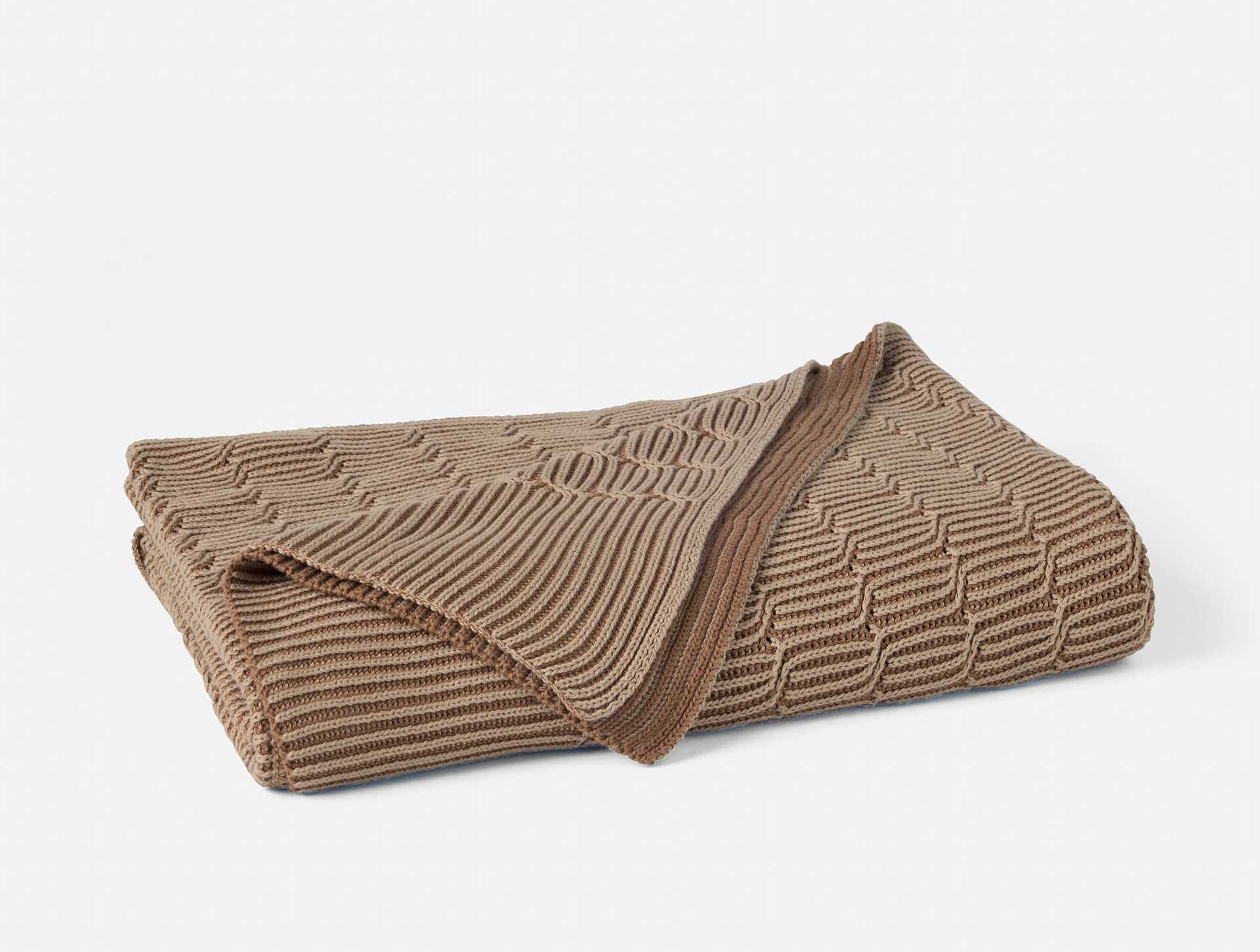
The Coyuchi Ivy Organic Knit Throw illustrates how knit construction changes the character of cotton. Made from 100% organic cotton, it has a tonal, reversible texture and a 50-by-70-inch size. Its knit surface gives it tactile interest while keeping the material story straightforward: a breathable cotton layer that can be used on a bed, chair, or sofa. The listed care is a cold, gentle wash and low tumble drying, with prompt removal recommended; always follow the current product label.
Another cotton option is the Coyuchi Cozy Cotton Organic Throw. Its chenille yarn gives the 100% organic cotton a plush feel and lightweight warmth. The washed finish, color-matched blanket stitch, and soft white reverse add details that influence both appearance and use. This is a useful reminder that “cotton” does not necessarily mean cool or flat: chenille creates a soft, raised surface, while the throw remains described as lightweight and suitable for layering.
Organic certification is one part of a product’s identity, not a guarantee of a particular warmth level or handfeel. Fiber content, yarn, finishing, and structure still determine how a textile behaves. If certification is important to your purchase, check the specific product information rather than assuming that every item in a broad category carries the same designation. In the case of the Ivy throw, the product information identifies GOTS certification and production in a Fair Trade Certified factory. These details help describe its sourcing and production context, while the knit itself determines much of its tactile character.
Wool and wool blends: a more substantial layer
Wool is often chosen for a warmer, more textured sensation. It can make a bed layer feel more substantial than a lightweight cotton weave, and different constructions create very different results. A fine, airy wool textile may feel quite unlike a dense, washed wool blend. Fiber percentages are therefore worth reading: a label that says “wool blend” may also list linen, viscose, or other fibers, each contributing to the finished fabric.
For a blend example, the Jules Throw in black herringbone is made by Libeco, not Coyuchi. It combines 49% wool, 27% linen, 19% viscose, and 5% polyamide. Its washed finish and herringbone weave create a thick, substantial feel, and its generous 51.2-by-86.6-inch dimensions make it a long option for a bed or seating area. This is not a pure wool bed blanket, but it shows how wool can be part of a mixed-fiber layer with a distinctive drape and texture.
That distinction matters when comparing products. A blend should not be treated as interchangeable with 100% wool, and the presence of wool alone does not tell you how heavy or warm a particular throw will feel. The Jules throw’s care instructions call for a wool or hand-wash program at a maximum of 30°C, with the textile unfolded fully before washing and line drying preferred. This is more involved than the simple routine many people expect from a machine-washable cotton throw.
Wool blends may be appealing when you want a tactile, structured layer and are comfortable giving it specific care. They can also be useful beyond the bed, draped across a chair or sofa where their texture becomes part of the room. Consider how often you expect to wash the piece, whether its care instructions fit your routine, and whether its dimensions are right for the place you intend to use it.
Cotton and wool together: a useful middle ground
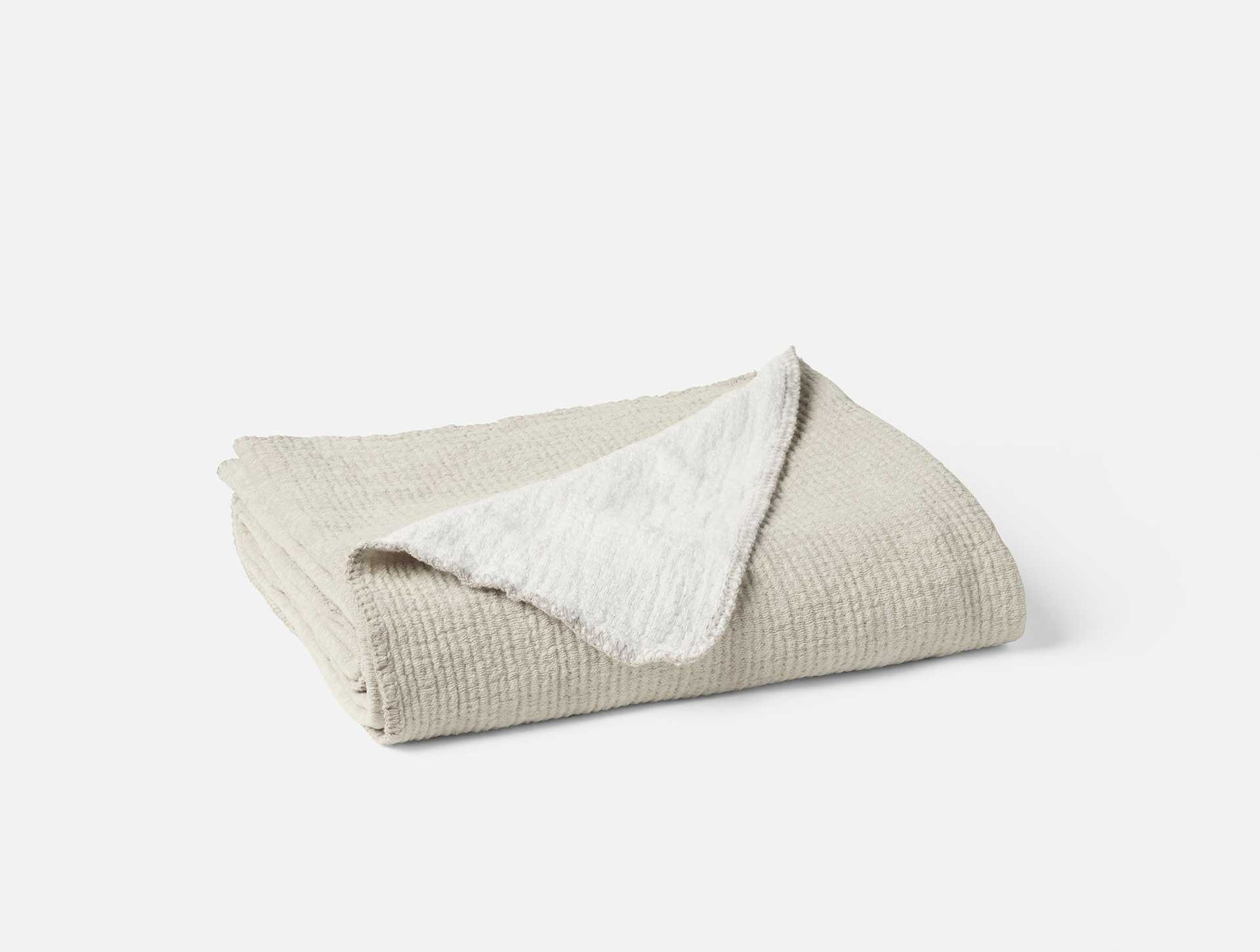
Sometimes the choice is not cotton versus wool. A blend can combine characteristics from both fibers, though the result depends on the proportions and construction. The Coyuchi Sequoia Washable Organic Cotton and Wool Throw, for example, is described as 70% organic cotton and 30% organic wool. Its fibers are twisted together before weaving, and the finished fabric is brushed for softness. The throw weighs 335 grams per square meter and has a double-needle stitched edge.
That composition offers a practical point of comparison for anyone weighing a cotton layer against a wool-rich one. Cotton makes up the larger share, while wool contributes to the blend’s warmth. The brushed finish adds softness, and machine-washable care can be attractive for regular home use. Product information identifies the cotton as grown in Turkey, the wool as sourced from Argentina, and the textile as woven in Germany; it also identifies GOTS certification.
A blended textile will not automatically deliver the exact feel of either fiber on its own. The point is balance: a cotton-forward base with wool included, finished in a way that gives the surface more softness and texture. If you want a layer for cooler nights but prefer an easier care routine than a delicate wool blend may allow, this kind of specification is worth examining. Confirm the care directions on the product label, because fiber blends can have requirements that differ from those of pure cotton.
Weight measurements can help, but they are not a complete predictor of comfort. Grams per square meter (GSM) describe fabric weight over a given area, not a universal warmth rating. A textile’s weave, finish, size, and the way it is layered all influence how it feels. Use weight as one comparison point alongside construction and fiber content, rather than treating it as a shortcut to a guaranteed temperature.
How weave shapes the experience
Fiber is the raw material; construction is the architecture. A knit has loops that can create stretch and a soft, flexible drape. A woven textile has yarns crossing one another, and the structure can range from smooth and close to textured and open. Chenille uses a distinctive yarn with a plush surface, while herringbone is a woven pattern that gives a textile a clear directional rhythm.
Matelassé offers another example of texture formed through construction. Organic cotton matelassé throws are commonly described as lightweight and rippled, with an airy, pliable drape. That makes them different in feel from a dense wool-rich textile, even if both can be placed across a bed. A raised or patterned surface can add visual depth without necessarily making a layer heavy. In practical terms, think about whether you want a textile that lies close and smooth, falls in soft folds, or holds a more substantial shape.
Edges deserve a look, too. A stitched hem, blanket stitch, fringe, or turned edge changes the finish and may affect how a throw behaves with regular use. On the Ivy Organic Knit Throw, a five-inch hem finish at the top and bottom frames the reversible knit. The Cozy Cotton Organic Throw uses a color-matched blanket stitch. These construction details are not merely decorative: they are part of the way a textile is finished and maintained.
Dimensions should be considered with the same care. A 50-by-70-inch throw offers a useful personal layer, but its coverage will depend on the bed, how you arrange it, and whether it is intended to cover a sleeper or decorate the foot of the bed. Longer dimensions, such as those of the Jules throw, can offer a different drape. Measure the intended surface and compare the product’s size before deciding that a throw will work as a full bed covering.
Care is part of comfort
A textile’s care routine influences how readily it becomes part of daily life. If you expect a throw to move between a bed, reading chair, and sofa, ease of washing may be a central consideration. Machine-washable cotton products are often convenient for routine care, but the details still matter: use the recommended water temperature, cycle, and drying method. A gentle cold wash and low tumble dry are common directions among the cotton products described here, with prompt removal recommended.
Wool-containing pieces may require more attention. The Jules Throw’s product care advises washing on a wool or hand-wash program at no more than 30°C, unfolding it completely before washing, and preferring line drying. The exact instructions vary by textile, so avoid generalizing from one wool product to another. When in doubt, follow the product label rather than relying on assumptions about a fiber category.
Before the first wash, consider the practical details: the size of the textile relative to your machine, the care symbols, and whether it should be laid flat or line dried. Avoid overloading a machine, use the recommended cycle, and store the throw only when it is clean and fully dry. These habits help protect the fabric’s surface and make care more predictable.
Good care is not separate from comfort; it is what allows a bed layer to remain inviting over time. A throw that suits your washing routine is more likely to be used often. If you love the feel of a more delicate blend but know that you need a frequent-wash layer, consider assigning it a lighter-duty role and choosing a machine-washable cotton or cotton-wool option for everyday use.
A seasonal guide to choosing your layer
There is no single calendar that governs bedroom comfort. Still, a simple seasonal approach can help organize choices without turning a bed into a fixed formula.
- Spring: As nights become milder, a breathable knit or airy cotton layer can provide a little coverage without feeling overly heavy. Keep a warmer throw nearby if temperatures shift.
- Summer: In a warm room, a lightweight cotton throw may work as a decorative layer or a modest covering. Choose by feel and room temperature rather than the season’s name alone.
- Autumn: As evenings cool, layering allows gradual adjustment. A plush cotton chenille throw or a cotton-wool blend can add texture and warmth over existing bedding.
- Winter: In a colder bedroom, a wool-rich or cotton-wool layer may feel more substantial. Check its size and care instructions, and add it over your regular bedding rather than assuming it replaces a full blanket.
The most adaptable choice is often the one that solves a real problem in your room. If you wake warm, a lighter cotton textile may be more useful than a heavy layer that remains folded at the end of the bed. If you feel cold after the room temperature drops, a wool-containing option may earn its place. Seasonal bed layering works best when it responds to the actual conditions of your home.
A practical comparison before you buy
When two throws look equally appealing, compare their specifications in a consistent order. First check the fiber content. Next, note the construction and finish. Then look at dimensions, weight if provided, care, and any certification information that is important to you. This approach keeps appearance in conversation with daily use.
- Choose organic cotton when you want a breathable-feeling, versatile layer and prefer the possibility of straightforward machine care. Look closely at whether the construction is knit, woven, or chenille, because each creates a different surface.
- Choose a wool-containing layer when warmth, texture, and a more substantial hand are priorities. Check the fiber percentages rather than assuming the item is pure wool, and make sure its washing instructions suit your household.
- Consider a cotton-wool blend when you want some of wool’s warming character in a cotton-forward textile. Construction and finishing will influence the final feel, so use the full description rather than fiber names alone.
- Match dimensions to the task. A personal throw, a bed accent, and a full-coverage blanket have different coverage needs. Measure the intended area before choosing.
- Look for specific, verifiable details. Certifications, origin information, and care instructions should be tied to the individual product rather than assumed across an entire collection.
For a cotton knit with reversible texture, the Coyuchi Ivy Organic Knit Throw is one option. For a plush-feeling cotton layer, the Cozy Cotton Organic Throw uses chenille yarn. For a cotton-forward blend that includes organic wool, the Sequoia throw provides another construction and care profile to compare. Each answers a slightly different need; none is a universal substitute for the others.
The final test is everyday use
The best bed layer is not necessarily the warmest, softest, or most elaborate one on a product page. It is the textile you reach for when the room cools, that drapes comfortably over your bedding, and that can be cared for in a way that fits your life. A textured cotton knit may make sense where breathability and easy layering matter most. A wool blend may be the better companion for a cooler evening or a room that asks for a more substantial covering.
Organic cotton and wool describe different starting points, not rigid rules about how a home should feel. Construction reshapes each fiber; care determines how readily it fits into a routine; and room temperature changes the experience from one season to the next. Read the specifications, measure your space, and think honestly about the way you sleep. With those details in view, choosing a Coyuchi bed layer becomes less about following a seasonal formula and more about finding the right balance of texture, warmth, and practicality for your own room.