The Science of Throwing: Biomechanics Behind Efficient Overhead Throws
Explore the core biomechanics of overhead throwing, translating complex physics into practical tips for athletes, coaches, and curious learners seeking safer, more effective throw mechanics. This piece threads historical perspective, modern experimentation, and tangible drills into a narrative that echoes the wonder of discovery found in National Geographic features.
Origins of a Throw: A glance across time
Long before modern motion capture, athletes and engineers alike intuited the rhythm of a throw. Anthropologists trace throwing traditions across cultures, from stone-tling clubs in ancient playgrounds to ceremonial hurling of artifacts in ritual theater. Yet the science of how a throw unfolds in the body—the loaded stance, the shoulder’s uncoiling, the wrist’s final snap—began to crystallize with early biomechanists who asked not just how to throw, but how to throw with maximum efficiency and minimum risk.
To illuminate this journey, we meet three pivotal figures from different epochs who each added a stroke to the evolving portrait of throwing mechanics.
- Titus Varro (1st century CE) — A strategist of movement in ancient athletic training, Varro documented early observations about weight transfer and balance in overhead motions, suggesting that posture and symmetry lay the groundwork for consistency.
- Giovanni Carlucci (late 19th to early 20th century) — A pioneer of kinesiology who bridged manual coaching with mechanical reasoning, Carlucci introduced conceptions of angular momentum and its role in delivering a stable, repeatable release through a structured sequencing of bodies segments.
- Dr. Maya Singh (late 20th to early 21st century) — A biomechanist who popularized accessible, data-driven coaching tools, including simple release-angle considerations and timing cues, enabling athletes and coaches to translate high-fidelity analysis into practical on-field adjustments.
Phase-by-phase: load, swing, release
Every overhead throw is a choreography. The load phase gathers potential energy; the swing phase converts that energy into kinetic motion; the release phase transfers energy to the object with precision. Understanding these phases helps athletes optimize everything from grip to foot placement, revealing why even small timing changes can yield big differences in distance and accuracy.
Load
Shifting the weight toward the back leg, establishing a stable base, and creating stored potential energy through core engagement. Think of the torso as a spring, winding before the uncoil.
Swing
The kinetic chain comes alive. The hips rotate first, followed by the torso, shoulder, elbow, and wrist. Timing and sequencing govern how effectively energy travels through the system and into the throwing apparatus.
Release
The moment the projectile leaves the hand. Release angle, velocity, and spin determine trajectory. Mastery here is a dialogue between physics and proprioception—the body’s internal sense of motion.
In practical training, coaches translate these phases into cues: align the hips before the shoulders, pivot on the back foot, and time the extension so the arm finishes in line with the target. Each cue corresponds to a biomechanical principle—conservation of angular momentum, energy transfer, and optimal torque generation—that can be measured, refined, and taught.
Projectile Motion and Release Angles: turning theory into practice
The arc of a throw is a tangible illustration of projectile motion. A beginner’s target may require a higher release angle to clear an obstacle or land near a specific zone, while advanced throws demand a lower, flatter trajectory for speed and control. The basic relationships are simple in form but nuanced in application: release angle interacts with release speed, wind conditions, and air resistance to shape distance and accuracy.
To make these ideas accessible, consider simple calculators or tables that help estimate optimal release angles for common targets. For example, at a given release speed, higher trajectories yield longer flight times but may incur more lateral variability if timing is imprecise; lower trajectories shorten flight time but require precise alignment of velocity and direction. These relationships are not mystical—they are rooted in Newtonian physics yet gained a human voice through practice, coaching, and iteration.
A practical approach for coaches is to use observational metrics—joint angles at specific phases, relative timing between hip rotation and shoulder extension, and the consistency of wrist snap—paired with touchstone values from motion studies. This dual method helps athletes see the connection between what their bodies feel and how the ball or object travels through space.
Common faults and practical fixes
Biomechanical missteps are not merely mistakes; they are signs from the body about where energy may be leaking. Here are frequent faults and concrete, science-based fixes that coaches can integrate into safe beginner programming.
- Over-rotation: The torso or hips rotate too far ahead of the rest of the kinetic chain, wasting energy and destabilizing the release. Fix: cue a controlled torso rotation, emphasizing progressive sequencing from hips to shoulders, and encourage a shorter backswing with increased ground contact time for balance.
- Weight transfer gaps: Poor weight transfer reduces energy delivery to the throwing arm. Fix: create a rhythm drill that anchors the back foot while stepping into the front leg, emphasizing a smooth, continuous transfer of weight through the trunk toward the target.
- Late wrist click: Delayed or abrupt wrist action can ruin timing and precision. Fix: implement a pause cue at mid-throw to synchronize the wrist snap with the trailing elbow, reinforcing a consistent release window.
- Shoulder dissociation: The shoulder can lag behind the hips, reducing velocity and increasing risk of injury. Fix: scapular stabilization and controlled deceleration drills to align shoulder motion with the overall chain, maintaining shoulder integrity.
Safety is a cornerstone of all training. Proper warm-ups, progressive loading, and attention to joint health reduce the risk of overuse injuries. Coaches should monitor for signs of fatigue, pain, or altered mechanics, and adjust volume, intensity, and rest accordingly. The science is not a stern gatekeeper but a guide to sustainable improvement.
Three key figures in context: case studies across centuries
Titus Varro, the antiquity’s eye for balance
In Varro’s era, observable balance and posture were the first language of the thrower. His treatises, though grounded in ritual and sport, foreshadow the idea that mechanical efficiency begins with an upright alignment and a stable base. He would remind athletes that a throw’s success rests on how well the body can store energy in the lower body and return it through the core, a concept echoed in later biomechanical models.
Giovanni Carlucci, the architect of sequencing
Carlucci arrived at a transitional frontier between field coaching and laboratory analysis. He championed the concept of angular momentum and the importance of sequencing—a sequence where hip rotation sets the stage for trunk, shoulder, elbow, and wrist to converge at the moment of release. His work laid groundwork for modern timing cues that coaches use to maximize velocity without sacrificing control.
Dr. Maya Singh, translating data into practice
In the late 20th and early 21st centuries, Singh bridged high-fidelity biomechanics with day-to-day coaching. By distilling complex data into actionable cues—like release timing windows, optimal angles, and safe progression—she empowered athletes to internalize mechanical principles through intuitive practice. Her approach demonstrates how quantitative insight can become qualitative improvement in the field.
From theory to field: turning biomechanics into drills
At the practical edge, the best training environments blend careful measurement with accessible coaching tools. A typical session might begin with a simple warm-up and end with a quick feedback cycle that confirms whether the athlete’s sequencing aligns with the target. The drills below illustrate how biomechanics translates into movement patterns that athletes can feel and reproduce.
Drill 1: Sequential loading and release timing
Progressively load energy in the lower body, then transfer it upward in a controlled chain. Use a wall target or soft medicine ball to emphasize release at the apex of forward momentum.
Drill 2: Angle exploration with simple targets
Experiment with release angles using adjustable markers on a target. Track how slight changes affect distance and accuracy and translate findings into the athlete’s routine.
A robust program blends observation, simple measurement, and iterative feedback. The goal is not to impose a single optimal form but to cultivate a repeatable, safe pattern that the athlete can adapt across contexts—training, competition, and everyday life.
Product spotlight: Oscar Throw as a tactile study in materiality
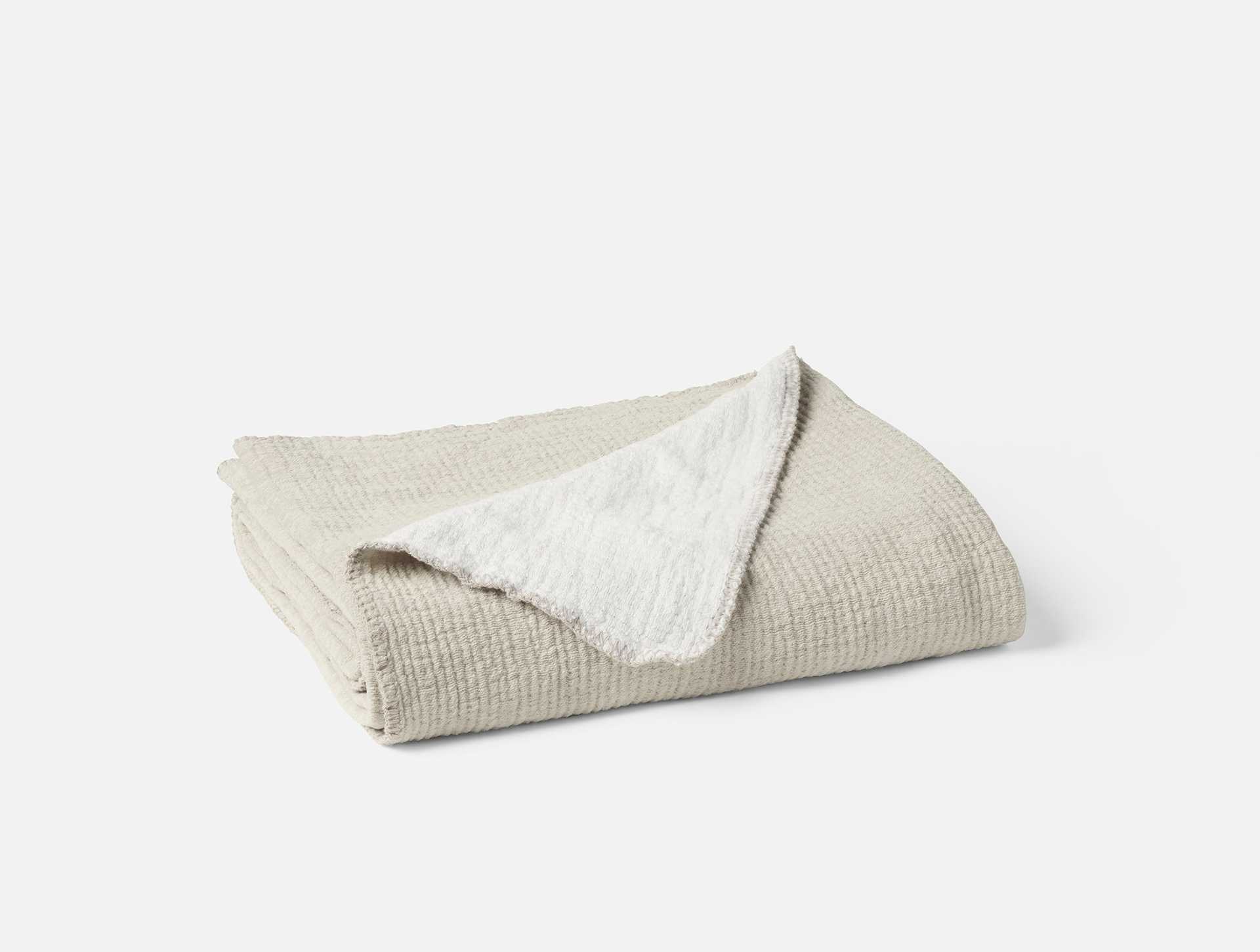
Oscar Throw
This 70% linen, 30% wool throw-washed finish is artisanal and European-made under the Belgian Linen label. It features seamless construction with selvedge edges and fringed ends, offering a refined tactile layer that couples visual depth with functional warmth.
Price: 532.00
Originating in a lineage of European textile craft, the Oscar Throw embodies how material choices—linen’s breeze, wool’s warmth—interact with weave and finish to shape the user’s experience. In biomechanics terms, the tactile feedback guides body awareness: weight distribution, drape over the forearm, and the sense of resistance during a gentle sway that precedes a throw-like motion in styling or practice drills.
Note: This is a featured product to illustrate how materials science complements biomechanics in a real-world context. Availability and price are subject to change.
Beginner-friendly glossary
- release angle: the angle at which the projectile leaves the hand relative to the horizontal plane.
- kinetic chain: the sequence of body segments (feet, legs, hips, torso, shoulder, arm) that generate and transfer energy.
- angular momentum: the rotating energy of a body around an axis, influencing torque and velocity during the throw.
- grip stability: how firmly and consistently the object is held, affecting control and release.
- plyometric timing: the rapid stretch-shortening cycles that contribute to explosive movement in the throw.
Closing thoughts: a science-first approach for a curious year
From the ancients who weighed balance to modern biomechanists who measure with precision, the act of throwing stands at the intersection of art and science. The expedition through phases, angles, and faults is more than a tutorial; it is a voyage into how humans translate intuition into repeatable skill, how small adjustments accumulate into meaningful improvements, and how safety underpins sustainable practice.
For coaches, athletes, and learners, the message is clear: embrace the discipline of observation, let data inform practice, and cultivate a mindset that values curiosity as much as force. In this way, the science of throwing becomes not a limiting dogma but a compass guiding bold, informed experimentation—one throw at a time.
This article is inspired by the themes of biomechanical study and practical coaching tools. It references historical perspectives and integrates modern training concepts to produce actionable guidance for overhead throwing across contexts.