Textiles & home
How Weave and Drape Shape the Feel of Coyuchi Throws
A throw’s comfort is measured in more than inches. Fiber, weave, weight, and finish determine whether a layer feels airy or plush, settles in loose folds or holds a defined shape, and works best on a sofa, at the foot of a bed, or around the shoulders on a cool evening.
Published November 22, 2026
A large throw can transform the feel of a room without changing its furniture. Folded over a sofa arm, it introduces a line of color and texture. Spread across the end of a bed, it adds a distinct layer. Opened on a cool evening, it becomes a practical source of warmth. Yet dimensions alone do not explain how a throw behaves. Two pieces with similar measurements may feel entirely different in the hand and fall differently over the same surface.
The reasons are woven into the cloth. Fiber affects softness, warmth, and care. The structure of the weave influences flexibility, surface texture, and air movement. Weight affects how the textile settles and how substantial it feels. Finishing touches—from brushing to fringe—change the impression at the edges and against the skin. Understanding these details makes it easier to choose an oversized throw blanket for the way you actually live, rather than by size alone.
Coyuchi throws offer useful examples of how organic cotton and different textile constructions can create different experiences. An open, rippled organic cotton matelassé has a notably different character from cotton chenille or a brushed cotton-and-wool blend. Each construction makes its own trade-offs between drape, warmth, texture, and everyday care.
The fabric beneath the surface
Fabric is a system, not simply a surface. A textile’s feel begins with its fibers, but the yarns made from those fibers and the way they are interlaced or knitted matter just as much. A soft fiber can be woven into a crisp, open fabric; a relatively light textile can feel warm if its structure holds insulating air. Conversely, a denser throw may feel reassuringly substantial without being the right choice for someone seeking a loose, easy-to-fold layer.
That is why product descriptions such as “lightweight,” “plush,” or “substantial” are best read alongside construction details. Chenille, matelassé, and brushed yarns are not interchangeable labels. They point to different ways of building texture and shaping the fabric’s surface. Those differences affect whether a throw slides easily over a bed, gathers into soft folds, or rests with a more defined outline.
For a shopper comparing a large throw, a practical question is not simply “How warm is it?” but “How does it deliver that warmth?” A lofty, tactile surface may feel cozy immediately. A thinner, flexible weave may be more comfortable as a light layer or in a warmer room. A blended yarn may combine characteristics associated with its different fibers, while still requiring care suited to the finished fabric.
Matelassé: ripples, air, and movement
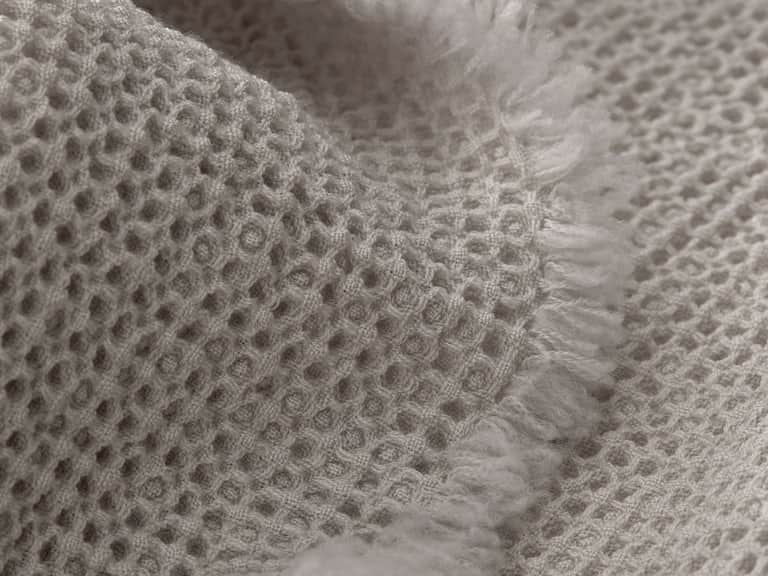
Matelassé is known for its raised, quilt-like appearance, created through the structure of the weave rather than necessarily by adding a separate padded layer. In an organic cotton throw, that surface can bring visual depth without making the textile feel stiff. Some constructions are airy and pliable, moving easily when lifted or folded. Others have a more defined pattern or a firmer hand.
The Topanga Organic Matelassé Throw illustrates the more open, flexible end of this spectrum. Its rippled organic cotton weave is described as lightweight and pliable, with a structure that can expand and contract over time. Waved edges and a small zigzag stitch help hold its fringe in place. The result is a layer with movement: it can gather softly over a chair or lie loosely across bedding rather than appearing rigidly flat.
That flexibility is part of the appeal, but it also has a practical implication. The accordion-like character of the weave means an individual piece may vary in shape and size. It is helpful to think of the fabric as a living textile that responds to handling and care, not as a perfectly fixed plane. For a person who wants a lightweight throw with a relaxed, textured fall, that behavior may feel natural. Someone who needs a precise, uniform edge for a particular bed or display may prefer to check dimensions and construction carefully before choosing.
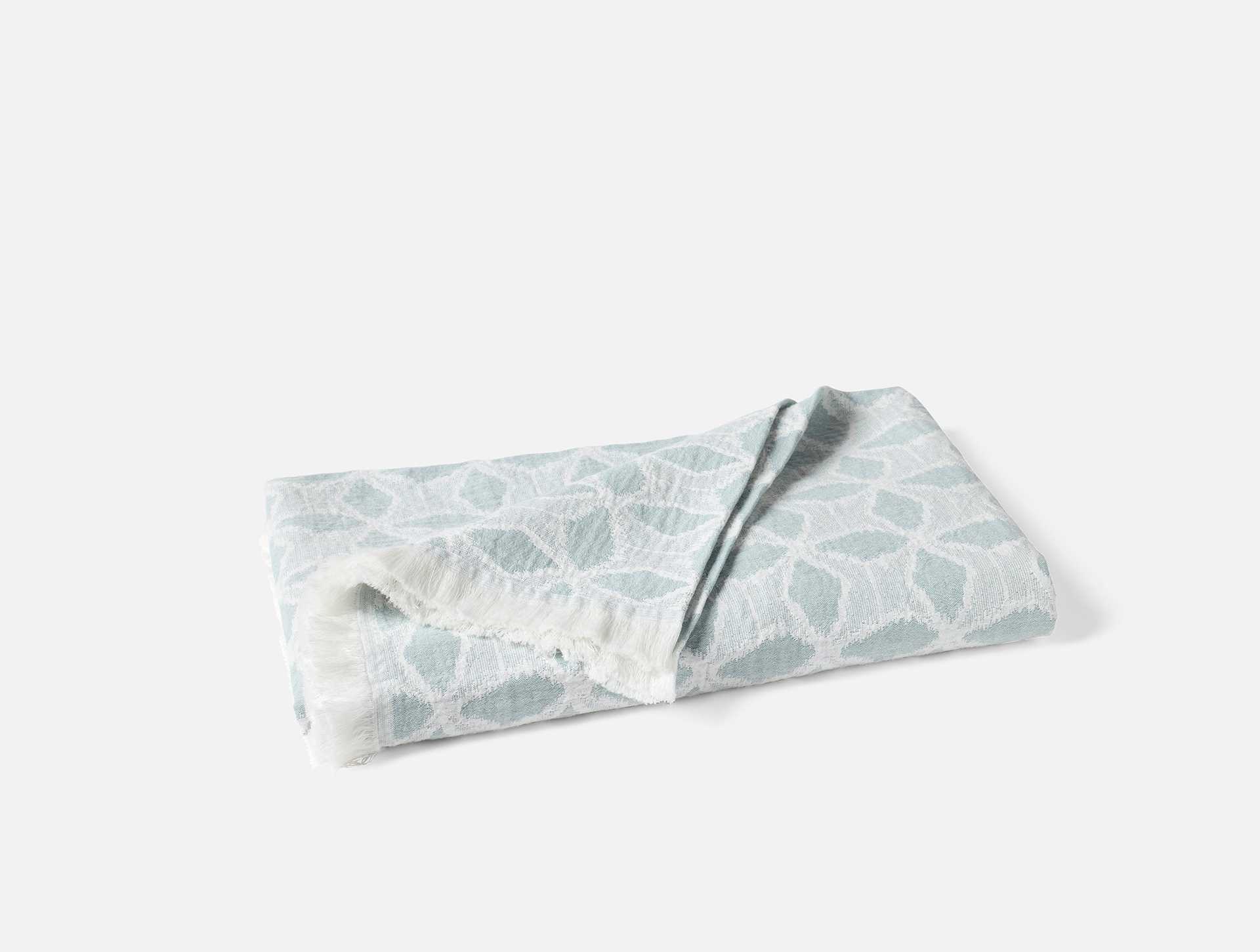
Matelassé also appears in the Palomar Organic Throw, where the emphasis is on a reversible geometric design inspired by traditional Japanese ikat patterns. The two sides offer a mirrored palette, giving the throw two related looks. Fringe and a turned hem finish its edges. Made from GOTS-certified organic cotton, the 50-by-70-inch throw is designed for everyday use and can be machine washed according to its care instructions.
Palomar shows that matelassé is not a single look or one precise degree of softness. Weave pattern, yarn, finishing, and density all contribute to the final character. Its measured silhouette and reversible design offer a more composed decorative effect than a highly rippled, featherweight construction, while its cotton fabric remains suitable for regular layering. It can be folded at the end of a bed, laid over a sofa, or turned to show the alternate color arrangement.
Brushed cotton and chenille: softness with presence
Brushing and chenille create another kind of tactile experience. Brushing raises fine fibers at the yarn or fabric surface, giving the textile a softer hand and a gently textured appearance. Chenille yarn, formed with a plush surface, is known for a fuller feel. Neither technique tells the whole story by itself: the amount of yarn, weave, finish, and overall weight all contribute to how warm and substantial the finished throw seems.
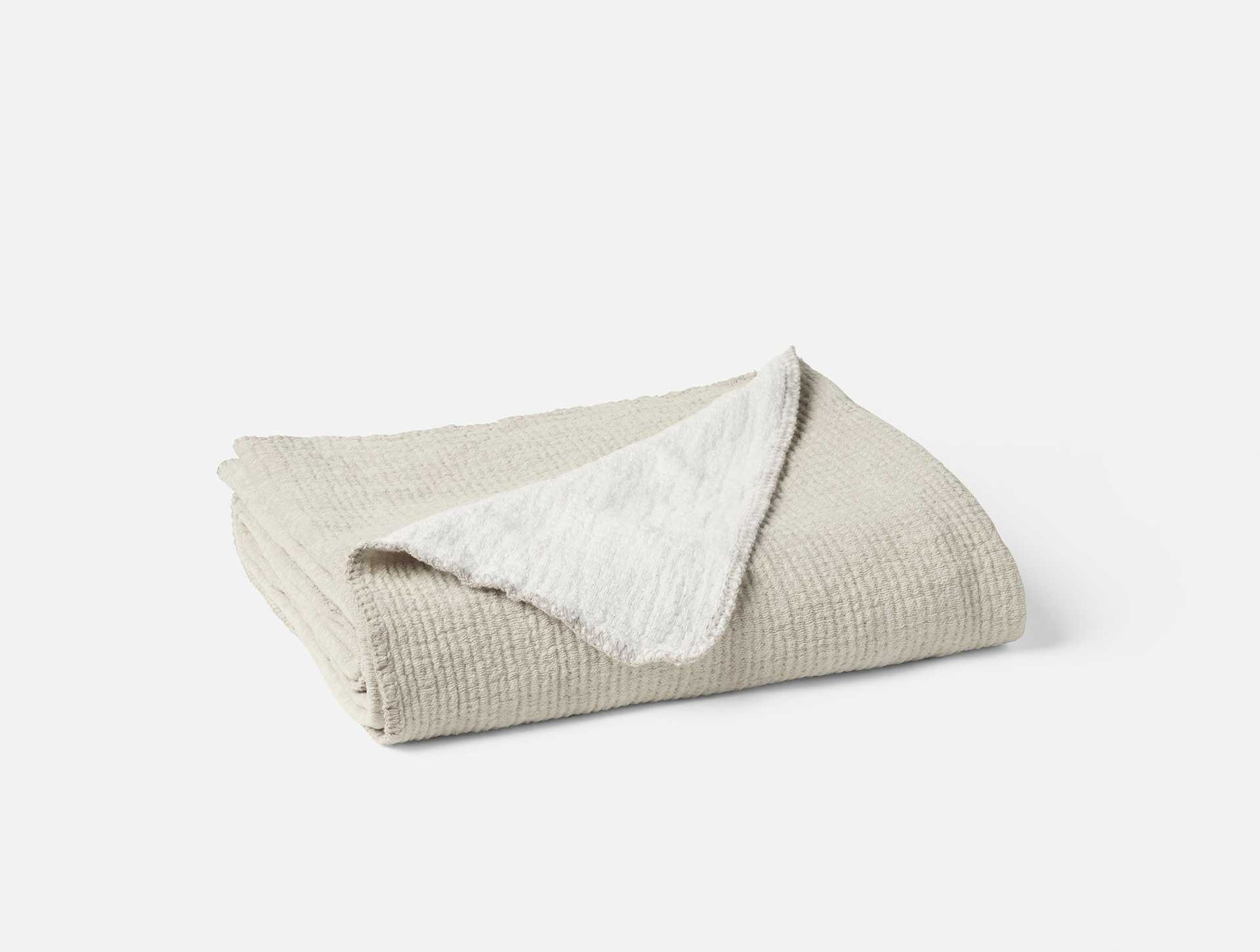
The Cozy Cotton Organic Throw is made from 100% organic cotton chenille yarn. Its construction combines a plush feel with lightweight warmth, and a washed finish gives it a gently puckered texture. The throw reverses to soft white, creating two ways to arrange it in a room. A color-matched blanket stitch finishes the edge, so the detail is integrated rather than sharply contrasting with the fabric.
That combination makes the Cozy Cotton Organic Throw a useful option for someone who wants softness without relying on a heavy, rigid textile. It may be used on its own or layered with another blanket when more warmth is wanted. Reversibility adds a small but meaningful benefit: turning the throw can shift the color balance of a sofa or bed without bringing in another piece.
Care matters to the experience too. This throw is specified for cold washing on a gentle cycle with like colors, followed by low-temperature tumble drying and prompt removal. Warm ironing is optional. Following the instructions helps preserve the fabric’s texture and finish. “Machine washable” is useful information, but it does not mean every wash setting is suitable; temperature, cycle, and drying method still matter.
Weight, warmth, and the way a throw falls
Weight helps explain why a throw drapes as it does. A lighter textile tends to move easily and may make soft, irregular folds. A heavier one can settle more decisively over a sofa back or bed corner. Weight is not a simple warmth scale, however. A textile’s fibers and construction affect how it holds air and how it feels next to the body, so two throws of equal weight may still provide different sensations.
A loosely structured matelassé often emphasizes movement. It can be folded quickly, layered without much bulk, and arranged in a casual way. A plush chenille throw gives the hand a fuller surface and may look more substantial when draped, even if the description emphasizes lightweight warmth. A brushed organic cotton-and-wool blend, such as the Sequoia Washable Organic Cotton and Wool Throw, brings together cotton and wool in a brushed fabric. Its composition is 70% organic cotton and 30% organic wool, and the construction is designed for everyday layering.
With any oversized throw, consider the surfaces it needs to cover. A 50-by-70-inch throw such as Palomar is suited to personal lounging and decorative layering, but it may not cover an entire mattress or wrap around every person in the same way. A larger listed dimension, like 51.2 by 86.6 inches for certain throws in the wider collection, provides more reach along a bed or across a sofa. Even then, the fabric’s drape and the furniture’s shape determine how much coverage appears in practice.
For a bed, a throw can be folded into a narrow band at the foot or opened as an extra layer over the lower half. A more defined textile may hold a tidy fold. An airy, flexible weave can create a relaxed, rumpled edge. On a sofa, a substantial fall may help the throw stay in place, while a lighter one can be easier to pick up and reposition. The best fit depends on the task: a decorative accent, a warming layer, or a textile that moves between people and rooms.
Choosing for a room, not just a product description
It helps to picture the throw in its intended setting before comparing details. A pale, reversible design may work well where a room benefits from a quiet shift in color. A textured, richly woven surface can add interest to plain upholstery. A soft chenille layer may suit a reading chair where touch matters. A lightweight matelassé may be preferable in a room where a thick blanket would feel excessive.
Think also about how often the throw will be handled. A piece used daily on a family sofa faces different demands from one mostly folded at the end of a guest bed. Machine-washable care can make an organic cotton throw easier to keep in regular rotation. A dry-clean-only fiber or construction may call for more planning. Before purchase, review the full care instructions rather than assuming that all natural-fiber throws can be treated alike.
- For an airy, flexible layer: look for an open or rippled matelassé construction and check whether the description notes that shape may change with use.
- For a plush hand: consider cotton chenille or brushed yarns, and look at the stated weight and care method as well as the fiber content.
- For visual versatility: a reversible throw such as the Palomar Organic Throw offers two coordinated faces in one piece.
- For more coverage: compare actual dimensions with the furniture or bed, and account for how much fabric is needed to drape over the edges.
- For frequent everyday use: prioritize care instructions that match the way your household can realistically wash and dry textiles.
Care helps preserve the drape
Washing can influence how a textile feels and falls, especially when it is made with a flexible weave or natural fibers. Start with the label or product guidance. For many of the organic cotton throws described here, the instructions specify cold water, a gentle cycle, like colors, and low-temperature tumble drying. Removing the throw promptly can help limit unnecessary creasing. Where ironing is permitted, a warm iron may refresh the surface.
Avoid treating those instructions as universal. Wool blends, alpaca, cashmere, and other specialty fibers may have different requirements, including dry cleaning. A throw’s fiber composition does not by itself determine its care method; the finished fabric and construction matter. When in doubt, follow the specific instructions supplied for that textile.
It is also worth considering the throw’s dimensions before washing. An oversized blanket can become heavy when wet and may not move freely in a small machine. Follow any advice about load size, and avoid compressing the fabric. Careful handling helps preserve the structure that gives a throw its softness and drape in the first place.
A tactile choice with a practical purpose
The language of textiles can sound technical, but its effects are immediate. A rippled matelassé feels different from a plush chenille. A reversible patterned cotton throw changes the room from either side. Brushing softens the surface; weight influences the way the cloth settles. Taken together, these qualities determine whether a throw feels light and flexible, soft and full, or structured enough to make a clear visual statement.
When comparing Coyuchi throws, start with how you want the layer to behave. The Topanga Organic Matelassé Throw suits a preference for airy texture and pliable drape. The Palomar Organic Throw brings reversible geometry and machine-washable organic cotton in a 50-by-70-inch form. The Cozy Cotton Organic Throw offers organic cotton chenille, a softly puckered finish, and a plush hand with lightweight warmth. Each presents a different answer to the same domestic question: what should this layer feel like when it is folded, spread, or gathered close?
Measurements remain important, particularly when shopping for an oversized throw blanket. But the most satisfying choice comes from matching size with structure. Look at the fiber, read the construction, consider the weight, and check the care. Then imagine the fabric in motion—settling across a sofa, folding at the foot of a bed, or resting around your shoulders. That is where weave and drape become more than specifications. They become the character of the throw.